Apollo Neuro
A physician-founded wearable ($448) delivering gentle patterned vibration to signal safety to the nervous system — the entry in this region with the most substantial trial infrastructure.
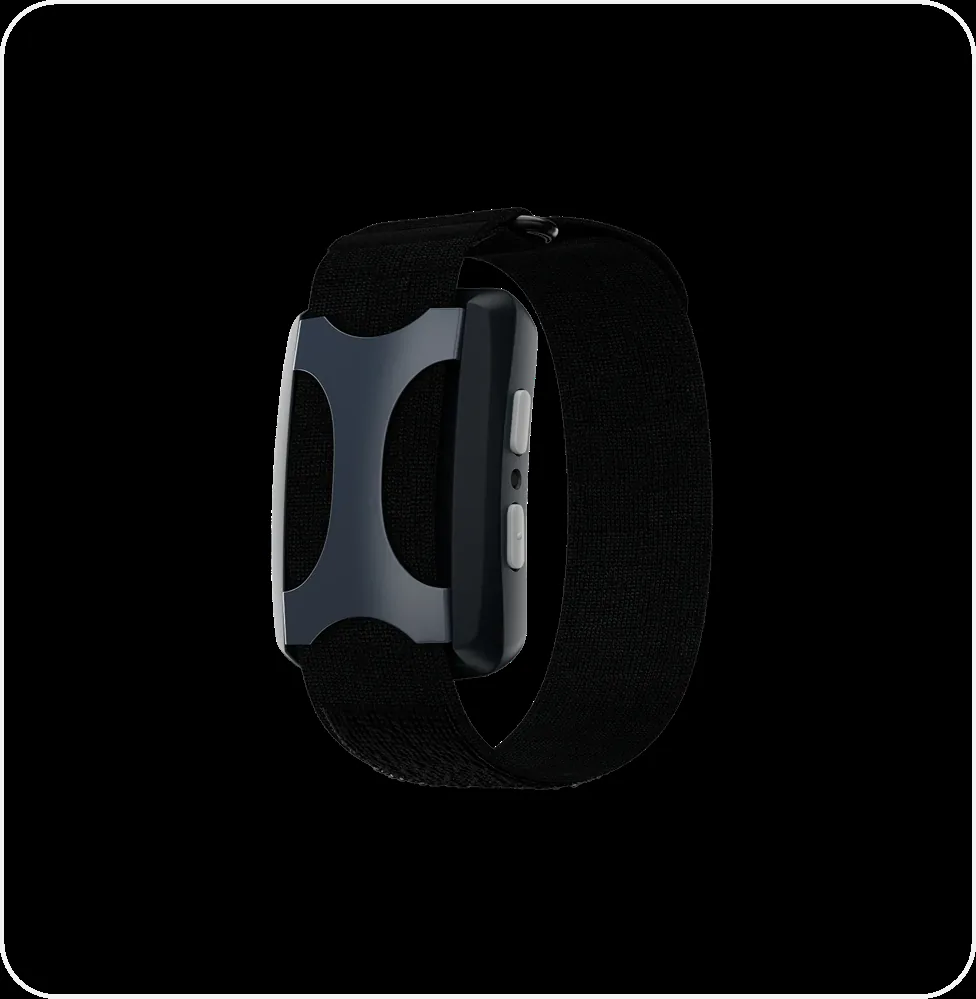
- The maker states the wearable uses soothing vibrations to signal safety to the body, improving sleep, reducing stress, increasing focus, and enhancing recovery.
- The site claims 17+ completed studies, 1,700+ research subjects, and 12 ongoing trials, with research led out of the University of Pittsburgh.
- The device is physician-founded, made in the USA, and priced at $448.
Named as the research home for Apollo's trials — an independently checkable institution, and the strongest trial-infrastructure claim in this region.
Advisors/endorsers named on the site — real public figures; weigh as endorsement, distinct from the trial data.
EVERY NAME LINKS TO ITS PAGE ON THE MAP — SEE WHO ELSE CITES IT. NAMING A SOURCE IS NOT ENDORSING IT.
- Of the '17+ completed studies,' how many are independently published and peer-reviewed versus internal, and what were the effect sizes?
- Did HRV or sleep measurably improve over 30 days in controlled conditions, versus a sham vibration?
- How much of the reported benefit is specific to Apollo's vibration patterns versus general relaxation from any gentle wearable stimulation?
Apollo is the most conventionally credentialed maker in this region — physician-founded, university-affiliated trials, an FDA-listed wellness lane — instrumenting an old idea (touch as a nervous-system safety signal) with modern hardware.
It marks the near edge of the frontier, where fringe healing tech meets mainstream consumer neurotech; its open questions are about effect size and independence, not plausibility.
Did your HRV actually move over 30 days versus baseline?
Company/university trials report modest improvement; the Atlas is collecting independent wearable data from users.
Report from the field →Muse
A consumer EEG headband (around $539 for the Muse S Athena) using real-time neurofeedback for meditation, focus, and sleep tracking — the most mainstream, evidence-backed device in this region.
Sensate
A patented chest-worn device ($269) that delivers low-frequency infrasonic vibration to tone the vagus nerve for stress and sleep — one of the more evidence-cited consumer devices in this region.
NuCalm
A patented neuroacoustic app (plus an optional biosignal-processing disc) claimed to induce deep relaxation and recovery without drugs — heavily adopted in dentistry, pro sport, and by named public figures.