Vielight
Intranasal and transcranial photobiomodulation devices (around $1,799) delivering near-infrared light to brain tissue — the entry in this region with the strongest independent research base.
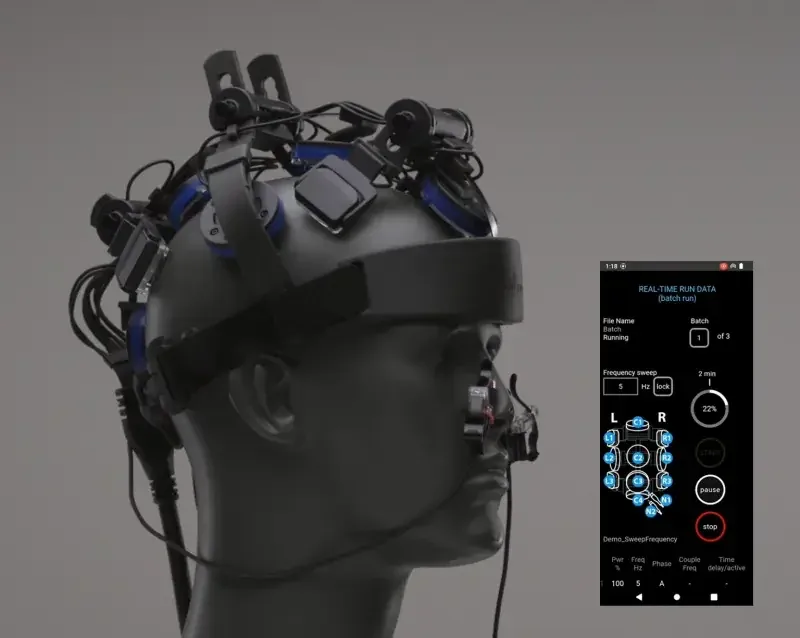
- The maker states its devices deliver non-ionizing near-infrared light to stimulate cellular processes, particularly mitochondrial ATP production, for improved cognition, memory, focus, and immunity.
- The site cites 30+ published studies, including a UCSF fMRI study on the Neuro Gamma device and a study in Nature Scientific Reports on EEG neuromodulation.
- Clinical trials are referenced across conditions including traumatic brain injury, Alzheimer's, and autism; the flagship Neuro Gamma is priced around $1,799.
A named, institution-affiliated study — independently checkable, and stronger than most citations in this region.
A peer-reviewed journal citation — verifiable, though effect size and replication remain open.
PBM/low-level light therapy has a genuine and growing peer-reviewed literature independent of this company — the mechanism is not fringe, though device-specific efficacy is still being established.
EVERY NAME LINKS TO ITS PAGE ON THE MAP — SEE WHO ELSE CITES IT. NAMING A SOURCE IS NOT ENDORSING IT.
- The device-specific clinical trials (Alzheimer's, TBI) — what stage are they at, and what were the actual effect sizes versus sham controls?
- How much of the cited '30+ studies' base is on Vielight devices specifically versus photobiomodulation as a general category?
- What is the durability of any cognitive effect after a treatment course ends?
Vielight is the closest thing in this region to a device with genuine, independently-cited clinical footing — photobiomodulation crossed from fringe into peer-reviewed journals over the past decade, and Vielight is among the most study-forward makers.
The open questions here are about dosage, effect size, and durability — not whether the underlying mechanism exists at all, which distinguishes it from most other entries in this region.
Which protocol, how long, and what cognitive measure actually moved?
Institution-affiliated pilot data is published; the Atlas is collecting longitudinal real-world user protocols and outcomes.
Report from the field →PureWave Cell
A locked array of neodymium magnets arranged on sacred-geometry principles, described as emitting a coherent low-frequency field — given free to beekeepers, sold to the public.
PhiRay
A $6,900 plasma-and-magnetic-field device marketed as the direct replacement for the maker's earlier Theraphi system — claimed to be 2–4x more powerful at roughly a quarter of the cost.
Piezo Phire
The most affordable device in the Implosion Group line (700 EUR) — a piezo-based localized 'implosive charge' unit launched at the maker's own FractalU conference.